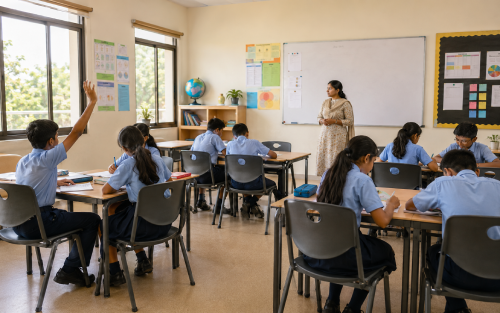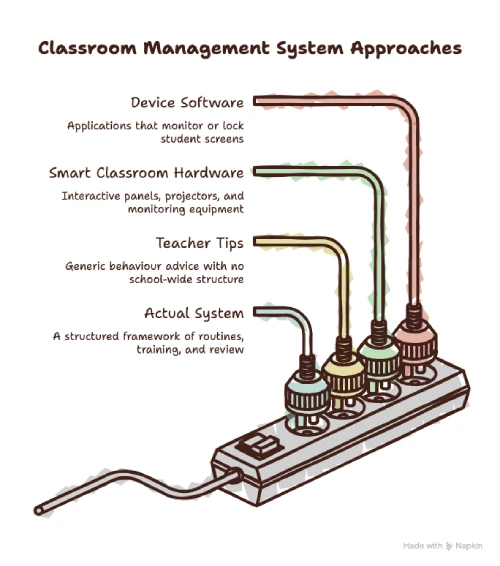

This is the oldest assumption in the room, and it is largely backwards. Research on classroom practice consistently finds that effective management is proactive rather than reactive. It rests on clear expectations set in advance, consistent routines, active supervision, and specific praise when students meet the mark, not on consequences applied after something goes wrong.
A widely cited meta-analysis by Korpershoek, de Boer, and Mouw, reviewing seventy-six controlled studies over two decades, found measurable gains across academic, behavioural, and social-emotional outcomes when schools adopted structured, evidence-based approaches. The same body of research notes that many beginning teachers receive limited training in these approaches, which is precisely where a school-level system, rather than individual instinct, needs to step in.
Discipline is a symptom a management system responds to. It is not the system itself.